Ancient inscriptions, modern tools, and a new approach to preserving cultural heritage.
More than 3,000 years ago, people carved questions into animal bone and shell, seeking deities’ and ancestors’ guidance about harvests, weather, wars, and royal decisions. These inscriptions became the earliest known form of Chinese writing and among the earliest writing systems in human history.
Today, we call them oracle bones. Since their discovery in 1899 in Anyang, tens of thousands of fragments have been found, many scattered around the world and only partially deciphered.
For scholars, piecing this history together is slow and specialized work. It’s also where technology, applied appropriately, can help move research forward.
The challenge of preserving an obscure and scattered history
Oracle bone research has always relied on close observation and comparison. Scholars spend years examining fragments, analyzing variations in ancient characters, and cross-referencing material spread across books, rubbings, and academic papers.
Today, the scale has grown significantly. Researchers are working with more than 15,000 documented oracle bone fragments, each physical piece often bearing multiple inscribed characters, alongside thousands of academic studies accumulated over decades. Digitization has expanded access, but it has also added complexity. Without a unified character library, identifying whether the same ancient symbol appears across different fragments or publications can be slow and repetitive.
AI research assistants help decode context for scholars and the public
This is where AI agents come in — not only as digital research assistants for scholars, but also as conversational guides that make oracle bone studies more accessible to a wider audience.
In oracle bone studies, AI is used to handle tasks that are data-heavy and difficult to scale manually. By analyzing high-resolution images of inscriptions and treating ancient characters as visual data, these systems can help match symbols across fragments, organize large volumes of material, and surface patterns that might otherwise take years to identify.
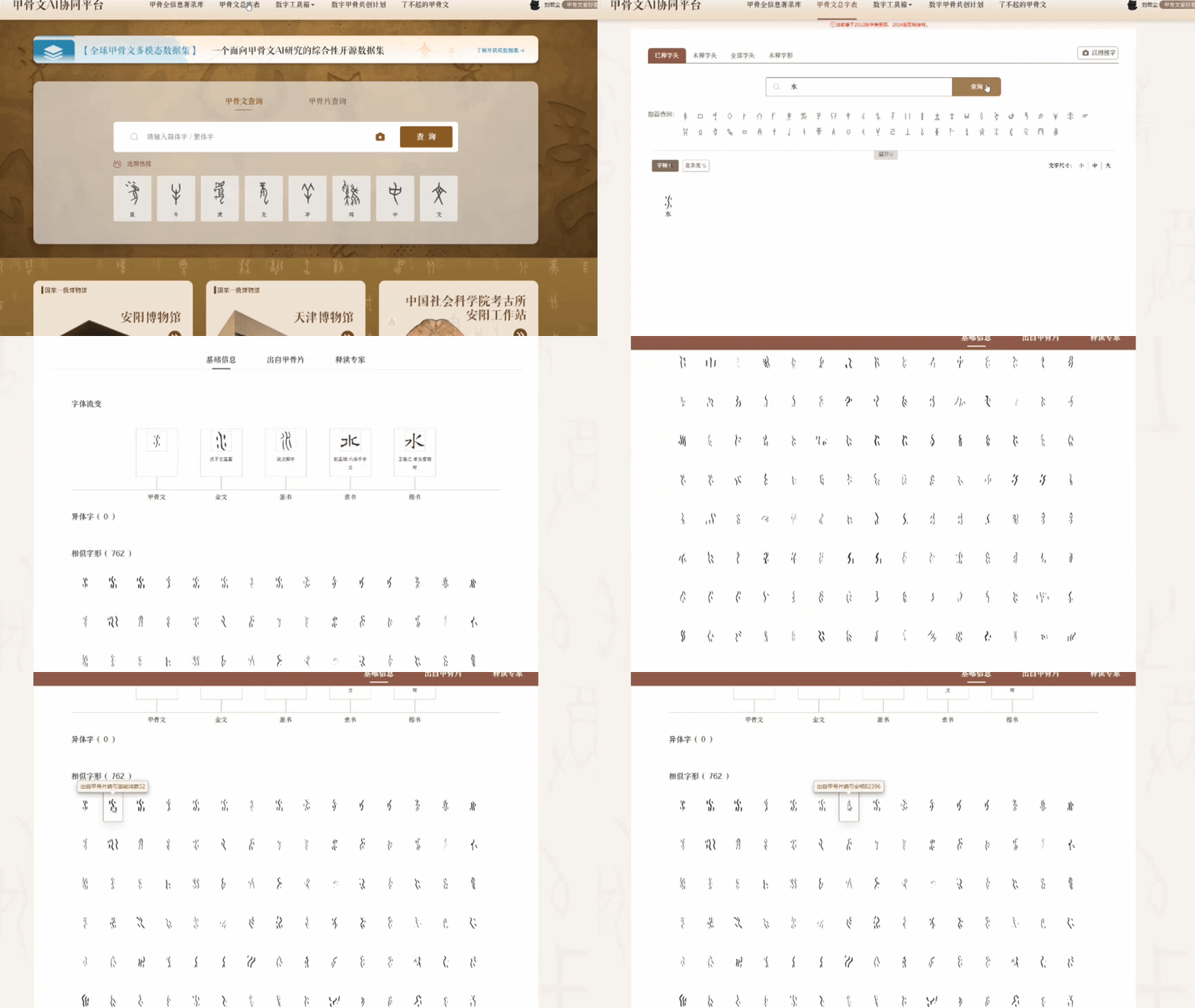
To put that scale into context, researchers have built multimodal datasets containing more than 1.4 million oracle bone character forms, drawing on thousands of fragments and academic sources. Processing and cross-referencing material of this size through manual comparison alone would be extremely difficult.
The same AI foundation also supports a conversational learning experience delivered through a web interface and Weixin Mini Program. The AI chatbot, which is built on the Tencent Cloud Agent Development Platform, allows both specialists and the public to explore oracle bone characters through dialogue, questions, examining visual similarities, and learning about historical usage and meaning in an engaging and intuitive way.
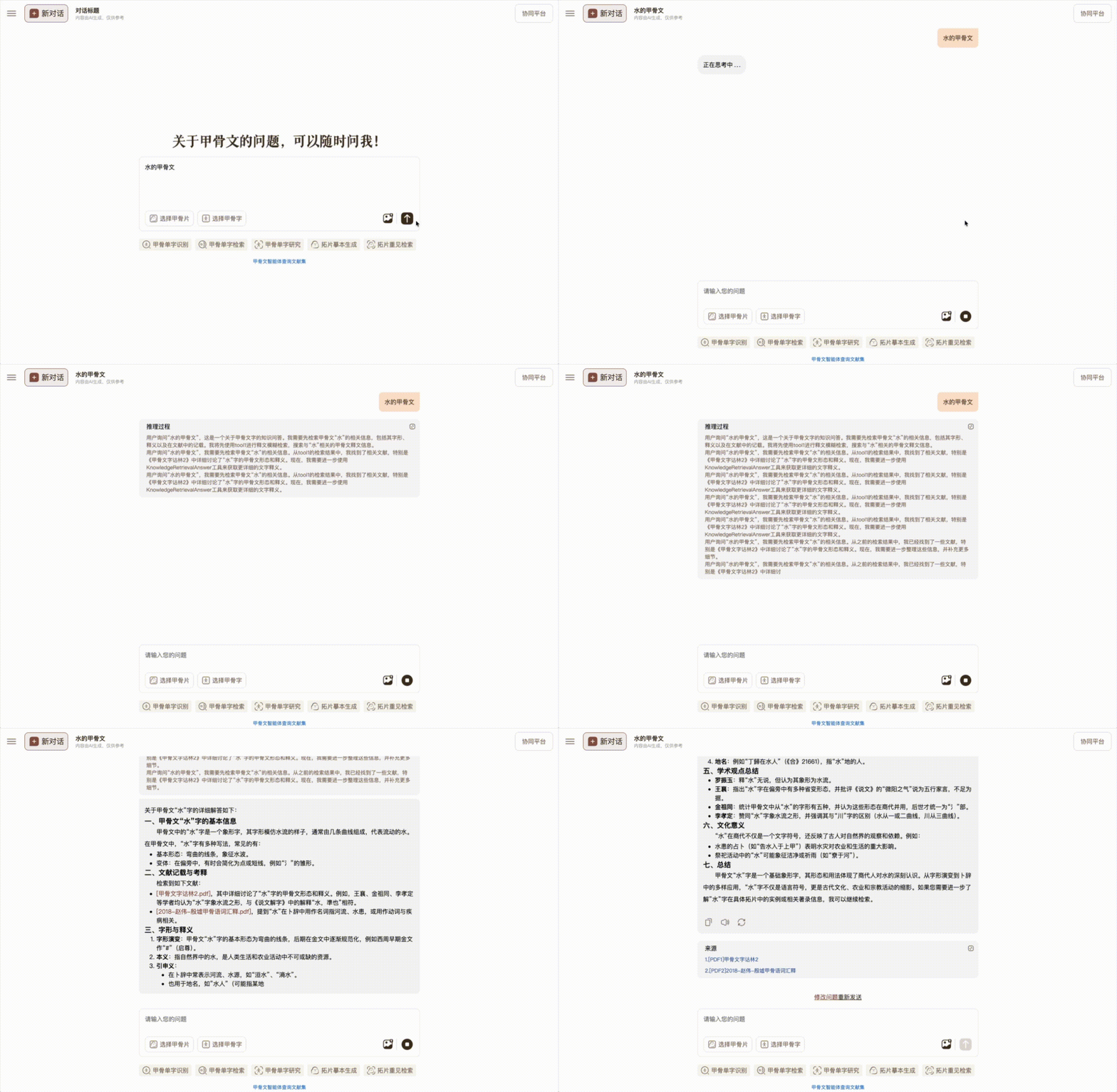
Interpretation and cultural meaning remain firmly in human hands. AI’s role is to support that expertise by improving efficiency and reducing duplication while scholars focus on insight rather than sorting. This accelerates the process by which researchers can interpret individual inscriptions and integrate these findings into a broader historical and linguistic context.
Collaboration to achieve digital reunification
None of this work happens in isolation. Academic institutions lead research and validation. Cultural experts define preservation priorities. Technologists contribute AI models and image-processing tools designed around scholarly needs.
This collaboration has improved the clarity of digitized inscriptions through techniques such as micro-trace enhancement, making faint or damaged carvings easier to study. For example, when a user encounters an unfamiliar oracle bone character, they can simply photograph it and consult an AI agent, which analyzes its visual features, compares it with known characters, estimates the degree of similarity, and suggests possible meanings and historical usage contexts.
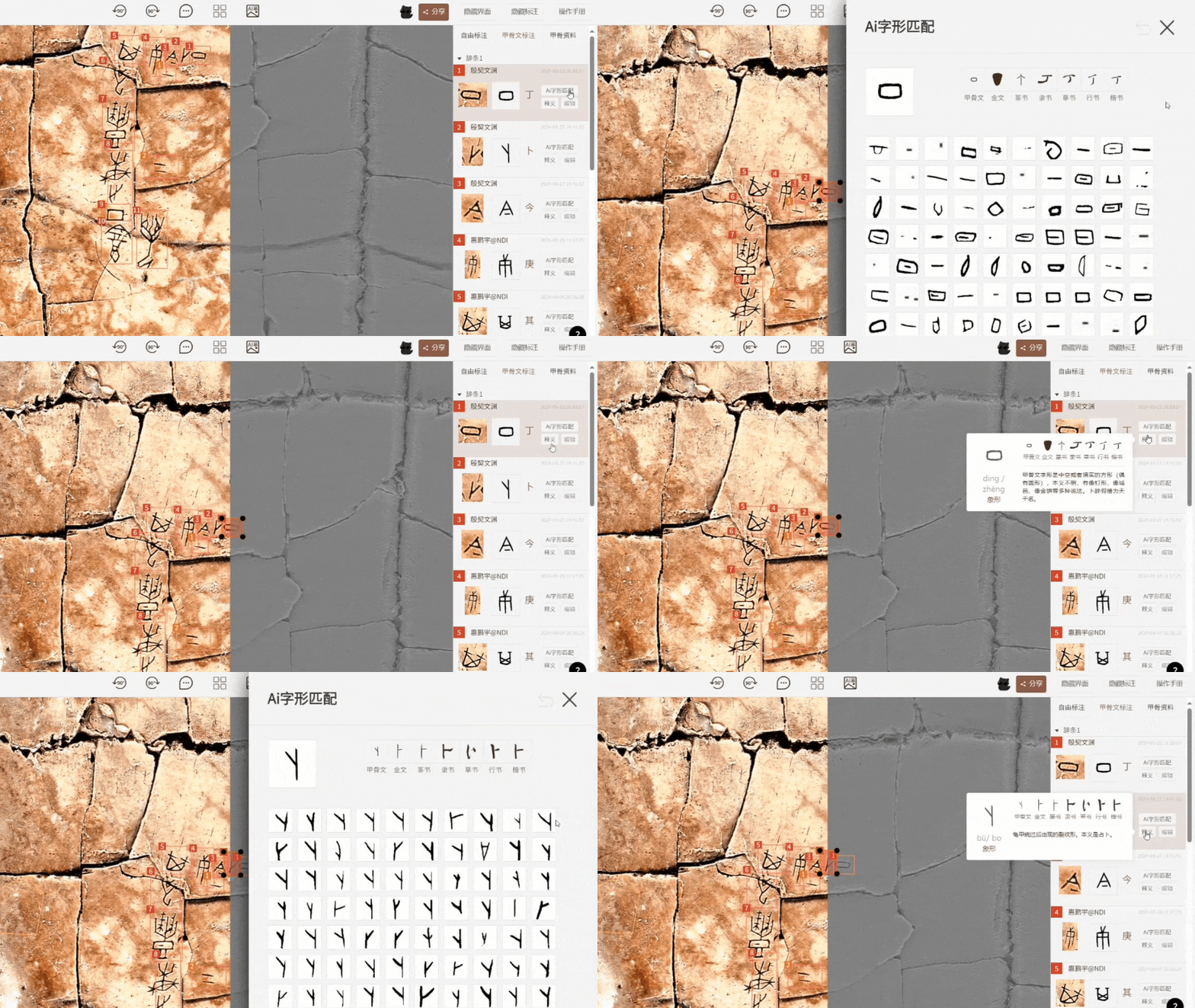
These shared digital foundations allow scholars to work across collections, institutions, and borders. One important outcome is digital reunification. While only a fraction of oracle bones have so far been digitally brought together, these early efforts point toward a future where dispersed cultural heritage can be studied as a whole, even when physical reunification isn’t possible.
The impact of this work extends beyond academia. High-quality digital records help protect fragile artifacts while making them accessible for education and public learning. They also reinforce the idea that cultural heritage doesn’t need to be physically centralized to be shared or understood.
For more about how Tencent is contributing to oracle bones research, click here.